ad

Showing posts with label period. Show all posts

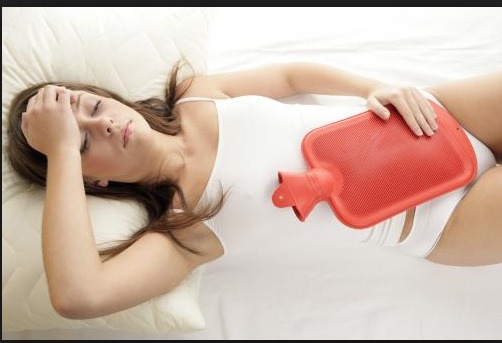
Why Am I Bleeding When Am NoT Suppose To Be On My Period?


From the time you get your period, you’re tracking it; I know patients who plan sex, their vacations, even their outfits around their cycles. And then sometimes…it changes. Of course that would spark questions! Here’s what to know before you freak out.
If Your Period Is Suddenly Heavier
Bleeding so much you need double your usual pads or tampons? If one period is crazy heavy, wait it out, but if a few in a row are, you may have developed a polyp or fibroids in your uterus. Sounds scary, but these benign growths are more of a nuisance than a danger. Or you may be experiencing a hormonal imbalance in your thyroid or pituitary—also completely treatable. Your doctor can order blood tests or an ultrasound to figure out the cause.

TRENDING CONTENTS


If It’s Erratic
An adult’s cycle can range anywhere from 21 to 35 days (and in teens, up to 45 days). Some women never have that regularity, which is fine, but if your periods are becoming more random—or if you’re suddenly skipping two months (or more)—tell your doctor. The most common cause is polycystic ovarian syndrome, or PCOS, which often hits women in their twenties. It’s a complex condition, so a doctor should confirm the diagnosis and best treatment for you. (If you’re using a hormonal form of birth control and occasionally skip a period, that’s normal. Sometimes the hormones do such a good job of thinning out your uterine lining that you don’t bleed at all!)
If You’re Spotting After Sex
Any amount of blood after sex can be scary. If it’s a relatively rare thing, though, you don’t need to worry. Happening often? Head in for a checkup. It could be an infection like bacterial vaginosis, a cervical polyp, or a sign of an STI.
If It Just Doesn’t Stop
Birth control is usually the culprit. Breakthrough bleeding is especially common with a new method, but it usually resolves on its own: after two to three months on the Pill, or three to six months with an IUD. If the bleeding doesn’t improve in that time frame, talk to your gyno about switching methods. And if you’ve been on your birth control for a long time and start spotting, your doctor should know that too—the bleeding could be caused by an infection or a benign growth.
If It’s…MIA
First, take a pregnancy test. But if you’re not pregnant or on a hormonal birth control, and you’ve gone three months or more without a period, it’s time to be evaluated. The most common cause in your twenties and thirties is PCOS, and early diagnosis is the best way to manage symptoms. (In your forties, it could be perimenopause.) If you have an IUD or the contraceptive implant, though, having your periods stop is common. I tell my patients: Enjoy not having to buy tampons!
Dr. White is an assistant professor of obstetrics and gynecology at Boston University.




Watch Yogi Filmed Herself Bleeding Via Her Leggings to Prove A Serious Point About Periods

The Shocking ThingS Janelle Monae Is Tweeting Concerning 'Menstrual Period Blood'


Despite the fact that half of the 7.5 billion people who inhabit this planet are female and spend a good portion of their lives menstruating, “period shaming” is an actual and totally absurd thing. To kick off Women’s History Month with a bang, Janelle Monae took to Twitter to point out how bloody ridiculous it is to make a woman feel ashamed for a common, natural and totally healthy monthly occurrence, opening up a much overdue dialogue about women’s health issues.
“Menstrual Period Blood. #WomensHistoryMonth,” she started out on Twitter. “It’s sad that there are prob folks more grossed out by and/or ashamed of menstrual period blood than they are the current administration. Never forget girls & women birthed the human race and hold the power to unbirth it. Y’all gone learn.”
After one of her followers negatively responded to her posts, using the word “gross” to describe blood (which Janelle pointed out is synonymous to “unpleasant, repulsive, disgusting”), the singer and actress schooled her fans about how period shaming works.

@Haredasmiles in this instance she did. She used the word "gross" (unpleasant, repulsive, disgusting) 2describe blood which in this instance
@Haredasmiles is a by product of the period (a natural and biological change that occurs in the female). When a person uses language like ..
“[Period blood] is a byproduct of the period (a natural and biological change that occurs in the female). When a person uses language like ‘gross,’ this causes the person on the receiving end to feel ashamed, embarrassed, humiliated, etc.,” she stated.
She also bluntly stated a birds-and-bees fact: “You wouldn’t be here w/out sumbodies bodily fluids. respect & celebrate everything that got yo ass here.”
The “Hidden Figures” star ended up sparking an important conversation on Twitter as well as in the international media, bringing attention to a taboo topic. While many women feel open talking women’s health topics related to weight loss, diet, fitness, pregnancy, childbirth, postpartum depression and cancer, it’s not so often they dish about “that time of the month” on a public level. Even though the symptoms related to periods can be debilitating, resulting in women having to call in sick to school or work, they are discouraged from “playing the period card” and often feel ashamed to be honest.
Just by opening up the dialogue, Monae is doing her part to normalize an integral part of every woman’s health — reminding us to be proud of the monthly shedding of our uterine lining. Other celebrities have also spoken out on the issue, including M.I.A. drummer Kiran Gandhi, who ran the London Marathon in 2015 without a tampon, bleeding during the race, to raise awareness around women’s access to menstrual products in developing countries.
Coincidentally — or maybe not so much — the official color of International Women’s Day is red, so there is no better day to spread Monae’s message than today.

What Do YOU Think?

Are agreeing with  Monae’s comments? Have you experienced period shaming? As a society, how can we normalize the act of menstruation?


Find Out Why Your Breasts Hurt When You Are On Your Period


In general, boobs are cool. They're soft, they're a sign that you're ~growing up~, and they're always close to your heart.
But sometimes when you're on your period, boobs can seem ... less than cool. More like sore, swollen, painful rocks. What gives? And what can you do about it? Sara Twogood, M.D., an obstetrician-gynecologist and assistant professor of clinical OB/GYN at Keck Medicine of USC, has the answers.


Natural hormone swings are the biggest cause.

Your hormones are constantly going up and down depending on where you are in your menstrual cycle. The main two responsible for sore boobs? Progesterone and estrogen.
See, during the two weeks leading up to your period, progesterone and estrogen start climbing. That spike stimulates connective tissue in breasts, which can set off tenderness and swelling. In most cases, girls feel the pain on both sides, often in the upper outer area closest to the armpits, and especially in the week prior to getting a period. Once your period comes, progesterone and estrogen levels drop, which usually eases the discomfort over the following day or two.
And just so you know, some girls are more sensitive to hormone fluctuations than others. That likely explains why you might deal with period boobs but your best friend can't relate.

Birth control pills can trigger pain, too.

Even if you've never experienced sore period boobs, that could change if you go on the Pill.
When you first start taking BCPs, your system needs time to adjust. The combo of pill hormones and the body's natural progesterone and estrogen can be enough to set off premenstrual breast pain even if you're not normally sensitive to hormone fluctuations.
The problem typically works itself out in a few cycles, once your body gets used to being on the Pill. If boob pain continues to bother you, however, ask your doctor if it makes sense to switch to a BCP that's made with a different type of progesterone or a lower dose of estrogen.

There's a lot you can do to feel better.

For many girls, period boobs are an annoying part of life. But you don't have to put up with the pain.
Some research-backed ways to prevent soreness include getting regular exercise, avoiding super salty foods in the two weeks before your period, and limiting caffeine in general. (Good thing PSLs come in decaf.)
If your boobs already are sore, consider taking a dose of ibuprofen (like Advil) or acetaminophen (Tylenol), two meds that dial down inflammation.
Applying heating pads or ice packs to the tender areas for a minutes several times a day can help keep swelling and pain in check, too. Experiment with both heat and cold to see which brings greater relief; everyone is different!
Finally, be mindful of bra choice. If you tend to go for stretchy bralettes or no bra at all, try wearing a well-fitting, supportive bra — even a sports bra — on days you're feeling sore. This controls jiggling and movement (more jiggling = more pain).
Finding a bra that fits is easy when you avoid some common pitfalls:
  • The straps dig into your shoulders or fall down.
  • Your boobs spill over the top, bottom, or sides of the cups.
  • The cups are wrinkled or baggy.
  • The band rides up in back or digs into your skin.
  • The center of your bra doesn't sit flush against your skin.

If you don't get relief, talk to your doc.

Something more serious might be up if your boobs stay sore while your period comes and goes. In some cases, nagging breast pain can be a sign of a fibroadenoma (lump of tissue), cyst, infection or pregnancy. Whatever the cause, your doctor can help you figure out the best plan of action for you.


The Best Ways To Avoid Night Time Stains When You're On your Period


Ever leaked period blood onto your sheets? Have you tried to wash it out, but to no avail? Well worry no longer, these steps will save your sheets and nightwear.


Steps


1.Use Adira Period Panties. They are leak-proof and ensure that your clothes and the sheets do not stain. Use the Boxer fit for complete protection.

2.Know your menstrual cycle. If your cycle isn't set yet, know what time of the month it generally comes (beginning, middle, and end). If you think it will come, use a pantyliner during the day, but a light/medium absorbency pad, depending on how heavy/light you flow starts at.


3.Use a menstrual cup.
These are internal like tampons, but they are not associated with TSS, (Toxic Shock Syndrome), so they can be worn for up to 12 hours (even during the night), unlike tampons. These hold more flow than tampons or pads and have light suction so they prevent leaking.


4.Wear a tampon and a pad. Change your tampon when you go to bed and when you get up in the morning. You can use a panty liner or a heavy pad, according to your needs.


5.Try cloth pads like Lunapads or Party In My Pants.
You can even make your own. These are not only healthier and more hygienic than commercial pads but they are also far more comfortable and stick in your underwear better, plus you can get extra liners to insert when needed. Being more comfortable with cloth pads means you're less likely to move about in your sleep, so pads stay in place rather than gathering up leading to leaking.


6.Grab two overnight pads with wings and overlap them, with one closer up front, and the other further behind. If necessary, use a third one in the middle.


7.You can also make a T-shape with two pads. Use one as usual, then place one perpendicular towards your rear.


8.Find a towel that no one uses or needs. Lay the towel on your mattress. When you go to bed, lie on the towel so that if you do leak it will go on the towel and not all over your sheets or bedding. Some people call these period blankets and may have dedicated soft blankets to use this way, they may also wrap around themselves in the morning to avoid mess when they get up before they can put in their normal protection.


9.Roll a few sheets of toilet paper up lengthwise
and place carefully in between your intergluteal clefts. Remove the toilet paper in the morning.


10.Get protective sheets, these are like those used by parents if their children wet the bed. Nothing embarrassing about using them, they will protect your mattress so if you do leak the blood doesn't get into the mattress causing smell or stains.


11.Invest in adult diapers if nothing else works. The pull-up kinds work the best, but any type will protect your bedsheets while you sleep.


12.Take a second pair of underwear 
and put them on over your first pair.


13.Put the pad or pantyliner closer to the front of your panties and sleep on your stomach.


14.Sleep comfortably and 'stainlessly'!
Use Cycleliners Feminine Bed Protection. Instead of sleeping on towels, these bed liners are waterproof, comfortable, and go over sheets with tuck in flaps so they stay put. They also come in a discreet burgundy color.


What The State Of Period Blood Tells About Your Body


Your period is kind of like a mood ring for the rest of your body. If you pay attention to the way you’re bleeding, you can pick up some major clues and insights about your health.
Step one is to decoding your  period: figuring out what "normal" looks and feels like for you, according to Sara Twogood, MD, a board-certified obstetrician-gynecologist, assistant professor of clinical ob-gyn at Keck Medicine of USC and founder of LadyPartsBlog.com.
Some questions to ask yourself: How many tampons or pads do you typically go through every day? When you change them, are they a little bit soiled or totally soaked? How many days does your period last, and how often do you get it?


You don’t need to obsessively take notes and tack up all the data on your wall like an old-fashioned detective solving a mystery. But you should get acquainted with how your body normally does its thang so you can figure out when something unusual is going on. Makes sense, right? Once that’s squared away, Dr. Twogood says these are some of the clues and changes that many girls notice.

IF THE BLOOD IS BRIGHT RED

Imagine this: You’re packing for a weekend trip and not sure how many pads or tampons to take with you. If your blood is bright red, bring a bunch. That color usually means your flow is just beginning and will probably get heavier in the days to come.

IF THE BLOOD IS REDDISH-BROWN

Blood doesn’t always have to be an exact match for the "Mary Jo K." Kylie lip kit. Don’t freak if yours looks reddish-brown or dark-brown. That just means you’re at the tail end of your period. At that point, it’s usually safe to downgrade to a lighter tampon or pad.

IF YOUR FLOWS BECOMES LIGHT

If you’re used to changing your tampon or pad multiple times a day and then have a few monthly cycles where you need far fewer, a couple of different things could be going on.
One big explanation is hormonal birth control. If you’ve just had an IUD like Mirena or Skyla inserted, or if you’ve just started on birth control pills, you might see your flow slow to a trickle. In and of itself, that’s no cause for concern, assures Dr. Twogood. Still, if you notice other, unwanted side effects of hormonal contraception — like weird headaches or mood swings — follow up with your doctor to see if your BC could use a tweak.
If the BC explanation doesn’t sound right to you, have your doctor check you out for other issues (like a thyroid imbalance). Dr. Twogood also notes that light periods are super common among girls and women who have eating disorders. In those cases, periods usually remain light until treatment is under way and overall nutrition gets back on track.

IF YOUR FLOW GETS HEAVY

Rapidly soaking through tampons or pads when that isn’t the norm could be the result of your birth control — or it could signal that something is up.
If you just had a copper IUD (ParaGard) inserted, you can preeeetty much expect your period to get heavier or longer. Most gynos schedule a follow-up appointment about six weeks after inserting an IUD. Be sure to mention any changes then so you and doctor can decide whether ParaGard makes sense for you going forward.
Otherwise, periods that suddenly become very heavy or start dragging on for more than a week could be caused by a polyp or fibroid, two types of benign growths that commonly crop in the uterine lining. Most polyps don’t require treatment — they go away on their own. Fibroids might require medication to shrink down. Either way, it’s smart to report anyheavy bleeding to your doctor, who may want to give you a blood test for anemia (low iron due to blood loss) even if there’s nothing more serious going on.

IF YOU SEE A CLOT

You know how sometimes your period feels very liquid-y, and then other times there’s a thicker splotch of blood? Those small clots are common on the heaviest days of bleeding, when your flow is too fast for the body’s built-in blood thinners to work their magic. (You might also notice a clot if you stand up after a long time sitting or lying down.) As long as clots are smaller than a quarter, they’re considered normal, Dr. T explains.
But if your clots are larger and you also get terrible cramps, have your doctor check you out for polyps and fibroids (discussed in the section above). Another possible explanation is polycystic ovary syndrome (PCOS), a hormonal disorder that affects 4 to 12 percent of women. In that case, your doc can help you come up with a diet and exercise plan that helps keep PCOS symptoms under control. Birth control pills often can help too, because they stabilize hormone levels.

IF YOU GET SUPER CRAMPY

During your period, your body produces chemicals called prostaglandins that encourage the uterus to contract and push out what’s inside. But strong contractions can briefly pinch off blood supply to the area, setting off waves of pain. It’s not fun, but it’s normal.
The OTC pain relievers ibuprofen (like Advil or Motrin) or naproxen (Aleve) can help, Dr. Twogood says. Both kinds of meds hinder prostaglandins enough to dampen nightmare contractions. For extra relief, try applying a heating pad to your lower belly or back for 20 minutes at a time.
On the other hand, cramps that literally cramp your life — to the point where it’s hard to go to school — could be a sign of a condition called endometriosis. (Basically, it happens when the type of tissue normally found inside the uterus starts growing outside the uterus.) Other symptoms include very heavy periods, nausea, and constipation. If that sounds like something you’re experiencing, let your doctor know. Endo is treatable!

IF YOUR PERIODS ARE IRREGULAR

A normal menstrual cycle is between 28 and 35 days — in other words, your period begins four to five weeks after your last period began. When you first start getting your period, it’s pretty normal to fall outside that 28- to 35-day range, sometimes with light bleeding in between.
Beyond the first couple of years of menstruating, irregular periods can be a sign of PCOS, a manageable hormone disorder that can also cause clots.
Light bleeding in between periods — aka spotting — can happen for a couple reasons. Sometimes the cause is a sexually transmitted infection such as chlamydia. If you’ve recently had unprotected sex, consider setting up an STI screening to see what’s up. Spotting is also a potential side effect of hormonal birth control, including the Pill, IUD and Depo-Provera shot. Otherwise, a polyp can trigger spotting. Your doctor can help you get to the bottom of it and work out the best plan of action.


RECENT POSTS

ad