ad

Showing posts with label natural disaster. Show all posts

Thousands Of Californians Has Been ordered to Leave As WildFire Ravages


Northern California officials ordered a new round of mandatory evacuations overnight Saturday for parts of the Sonoma Valley and eastern Santa Rosa as gusting winds returned, reviving dangerous fire conditions in a region that has been devastated by ongoing blazes since last week.

TRENDING TECH CONTENTS


The National Weather Service warned Friday night that strong winds were expected throughout Northern California, with gusts of 35 to 45 mph, putting much of the region under a red flag warning.
“If any new fires start, they could spread extremely rapidly,” the NWS said. Dangerous winds and extremely dry “fuels” on the ground “also could cause problems with the current wildfires and the firefighters trying to suppress them,” the NWS noted.
“If you live in the areas below, LEAVE NOW!” Sonoma County officials wrote Saturday. The evacuation order affected thousands of residents, as the Nuns Fire remained a “big, unwieldy beast,” a fire spokesman told KQED News.
In neighboring Napa County, to the east, officials said Saturday morning that they did not expect any new evacuations but cautioned residents to remain vigilant because of “significant wind activity.”
“Sonoma County has had a very tough morning with the winds that have surfaced over there. We’re not out of the woods and have work to do,” Napa County Fire Chief Barry Biermann said at a news conference Saturday morning. “But on our side of it, off of the Highway 29 area, we have pockets that are burning down into dry creek.”
Even as several fires still burn across hundreds of acres in the California wine country, the horrific scale of death and destruction is coming into focus.
At least 38 people have been confirmed dead in four counties, many of them elderly, some burned to ashes. One victim was 14 years old. (The Mendocino County Sheriff’s Office revised its death toll late Friday, from nine fatalities to eight.)
Taken together, the disastrous blazes — more than 20 in all since Sunday, including at least six in Sonoma County — have killed more people than any other California wildfire on record. The death toll is certain to rise as authorities — some accompanied by cadaver dogs — continue to explore the wreckage.
Hundreds are still missing. Statewide, an estimated 5,700 structures have been destroyed, including whole neighborhoods reduced to smoldering rubble. About 90,000 people have been displaced by the fires, officials said Friday.
“It’s devastating. I’ve only driven maybe 5 percent of the fire area . . . I don’t even think I understand what the damage toll is going to be, and I have a better handle on it than most,” Sonoma County Sheriff Rob Giordano told the Los Angeles Times. “Santa Rosa will be a different planet. There is so much to rebuild. It will absolutely change the community.”
Sonoma County, north of San Francisco, suffered the most damage, with 20 people confirmed dead and 223 still reported missing. The fires have destroyed nearly 3,000 homes and caused $1.2 billion in damage in Santa Rosa, the county seat and gateway to the wine tourism industry.
Firefighter Chris Oliver walks between grape vines as a helicopter drops water over a wildfire burning near a winery Saturday, Oct. 14, 2017, in Santa Rosa, Calif. Fire crews made progress this week in their efforts to contain the massive wildfires in California wine country, but officials say strong winds are putting their work to the test.© (AP Photo/Jae C. Hong) Firefighter Chris Oliver walks between grape vines as a helicopter drops water over a wildfire burning near a winery Saturday, Oct. 14, 2017, in Santa Rosa, Calif. Fire crews made progress this week in their efforts to…
In Napa County, there were six confirmed fatalities as of Saturday afternoon; 74 people remain unaccounted for, out of the more than 200 reported missing over the past week.
Firefighters have made some significant gains. As of Saturday morning, some of the deadliest fires in Sonoma and Napa counties were nearly 50 percent contained, according to the California Department of Forestry and Fire Protection.
Biermann, the Napa County fire chief, said firefighting efforts Saturday would be focused on maintaining perimeter lines to keep existing blazes contained, even as they continued to burn.
As blazes are extinguished, counties have been preparing to let people return to evacuated areas.
“My commitment and top priority remains to bring back normalcy to this community,” Cal Fire Deputy Chief Bret Gouvea said Saturday. The causes of the fires remained under investigation, he added.
A search and rescue team looks for bodies at a property where a person was reported missing in Santa Rosa.© Josh Edelson/AFP/Getty Images A search and rescue team looks for bodies at a property where a person was reported missing in Santa Rosa.
Giordano said Friday deputies had begun the task of searching for the missing and the dead, with bodies showing up in a variety of conditions.
“We have recovered people where their bodies are intact,” he said, “and we have recovered people where there’s just ash and bone.”
The majority of the victims who have been identified were elderly, except for one: A 14-year-old who was found near his family’s home in Mendocino County. Kai Logan Shepherd was running away from the fire when he was killed, according to the Mendocino County Sheriff’s Office.
Of the 10 Sonoma County victims who have been named so far, two of whom were identified through medical devices or implants, two through dental records and another by a distinctive tattoo, while others were matched with fingerprints or visuals and other investigative means.
Most were from Santa Rosa, and all were older adults, with an average age of 75, the sheriff’s office said. The youngest, Michael John Dornbach, was 57; the oldest, Arthur Tasman Grant, was 95. In neighboring Napa County, an elderly couple who had just celebrated their 75th wedding anniversary were killed on Sunday. Another elderly couple in their 80s were also killed in Mendocino County.
Sonoma County spokesman Scott Alonso said it’s not yet clear why the victims were unable to escape the fire. But, he said: “Folks who are elderly have some mobility challenges and are wheelchair-bound. They may not have access to a car. We had calls right when the fires were going on . . . folks needed rides. They needed rides to get out of those mandatory evacuation zones.”
Of 1,485 missing-person reports in Sonoma County, 1,250 had been found safe by Friday afternoon, said Giordano, the sheriff. The whereabouts of the 235 missing were still unknown, although it is possible that a number of them were found but not yet reported to authorities. Others may be out of touch because of power outages and downed cell towers. In most cases, people were removed from a missing-persons list after authorities received calls from families saying they’ve been found.
As the week progressed, authorities began facing questions about the cause of the most damaging blaze, in Sonoma, and whether they did enough to warn vulnerable residents as the flames edged closer to populated areas.
The scrutiny marks the next phase of a disaster that erupted seemingly out of nowhere Sunday night, prompting panic among residents who had no idea that a fire was bearing down on them and emergency workers who said they were stunned at the speed with which the fire progressed.
In Sonoma County, law enforcement officials said they used a Reverse 911 system to call residents’ landlines to evacuate. The county also sent out alerts through a voluntary text-message system. As of June, however, just 10,500 of the county’s half-million residents had signed up for the alerts.
Alonso, the county spokesman, said officials chose to not send out a countywide alert to cellphones out of fear such a message would incite panic and clog roadways.
“We wanted to target specific neighborhoods that were under fire,” he said. “If an all-county emergency evacuation was issued, the roads would’ve been jammed, [and] our emergency responders would’ve had difficulty getting to where they need to go to evacuate people.”
On Friday, the Sonoma County Sheriff’s Office released body-camera footage showing a deputy frantically driving door to door in Santa Rosa early Monday morning, as flames closed in on the neighborhood.
Panting and coughing, the deputy can be heard seen running through heavy smoke and flying embers trying to notify residents. At one point, he and another person help evacuate a disabled woman.
“Sonoma County Sheriff’s Office, this is a mandatory evacuation notice!” the deputy blares through a loudspeaker as he drives through a street flanked by fire. “Leave your homes!”
Days later, Santa Rosa residents would be sifting through the ashes of what used to be their homes — or stood shocked to discover their houses had somehow survived.
In downtown Santa Rosa on Saturday, about 150 residents waited in line to enter a local assistance center where they could register with FEMA for disaster relief.
As volunteers passed out sandwiches and ash flitted through the air, some displaced residents highlighted a silver lining in their devastating losses: They knew their homes had burned, while there are still thousands who live in evacuation zones and don’t know whether their homes are still standing.
“It’s probably harder to not know than to know,” said Steve Vella, who lived in the Coffey Park area, the majority of which burned early Monday.
“I told my husband it’s a relief that we know our fate,” added Corinne Rasmussen, a 54-year-old administrative assistant who had lived in the Larkfield area. She and her husband are currently staying with her sister in Rohnert Park while trying to figure out their next move.
A FEMA representative outside the assistance center said that the agency didn’t yet know whether it would be constructing temporary housing for those who have been displaced. Their priority was to determine how much and what kind of assistance would be needed.
“Right now we want to get disaster survivors registered,” said FEMA spokesman Victor Inge.
A block away from the local assistance center, a poster summed up the local mood: “The love in the air is thicker than smoke.”
California Gov. Jerry Brown (D) and U.S. Sens. Dianne Feinstein (D) and Kamala D. Harris (D) visited the disaster zone in Sonoma County on Saturday afternoon. At a town hall, they said the fires’ aftermath was nothing like anything they had seen before.
“This community has endured such incredible loss and pain,” Harris said. “Please take advantage of all the resources that are available to you … It’s going to be a long road ahead.”







Tornado warning Releases for swath of Brevard County


Update, 11:20 a.m.:
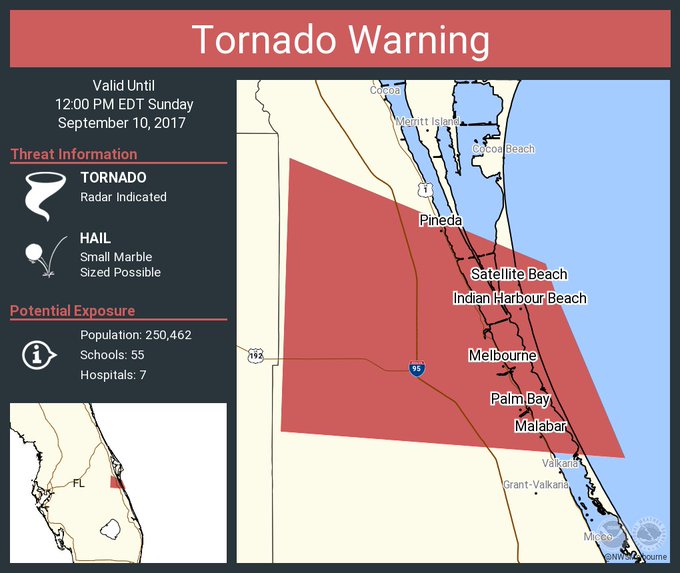
Brevard County is under yet another tornado warning as Hurricane Irma starts impacting Florida, according to the National Weather Service in Melbourne.
The weather service expanded the range of the latest warning into include much of central and southern Brevard, including Melbourne, Palm Bay and beachside cities and towns.
More than 250,000 county residents fall under the new warning, which will remain in effect until 12 p.m.

Update, 11:05 a.m.:
Another tornado warning has been issued, this time for southern Brevard County, until 11:30 a.m. 
The affected area is just south of Melbourne.
Original story:
A tornado warning covering Palm Bay and West Melbourne was cancelled early after the storm band that prompted the warning grew weak, National Weather Service officials reported. It was the second tornado warning issued for the south Brevard County area.
Residents were urged to take cover before weather officials cancelled the warning. "The storm which prompted the warning has weakened below severe limits, and no longer appears capable of producing a tornado. Therefore the warning will be allowed to expire. However heavy rain and strong winds will continue as Hurricane Irma lifts north from the Florida Keys," the weather service reported.
The warning was originally set to expire at 9:45 a.m.
"It was radar indicated," said Peggy Glitto, a meteorologist with the National Weather Service in Melbourne, of the storm formation that set off the warning. "We should begin seeing some of the heavy bands (from Hurricane Irma) coming up."
A tornado warning means that conditions indicate a tornado or funnel cloud may be in the affected area. Brevard County remains under a tornado watch until 12 p.m.
The weather service also reports wind gusts of up to 45 mph. Tropical storm winds are expected to arrive in Brevard sometime around 2 p.m. and then spread toward the north end. 


Hurricane Irma's Advances Bringing down power to nearly 3,000 in Fort Myers area

Around 9 a.m. Sunday residents along Three Oaks Parkway in south Lee County finally had their first tangible smack from Hurricane Irma when their power went out.

Earlier, as the first winds from Hurricane Irma brushed through the southern tip of Florida power companies supplying energy to the area reported about 3,000 residents how lost their power.


Ximena Hurtado, who lives in the Lakes Community just off Three Oaks near Alico Road, reported via text message that her family, including her husband, his brother, and her daughter, was now without power.


Farther down Three Oaks, in the Rookery Point community in Estero, Len Vanover reported lights flickering and the cable sporadic but that power was still on.

"It's just like a regular storm," he said.

In North Fort Myers, Rhonda GB reported her power went out around 10 a.m.

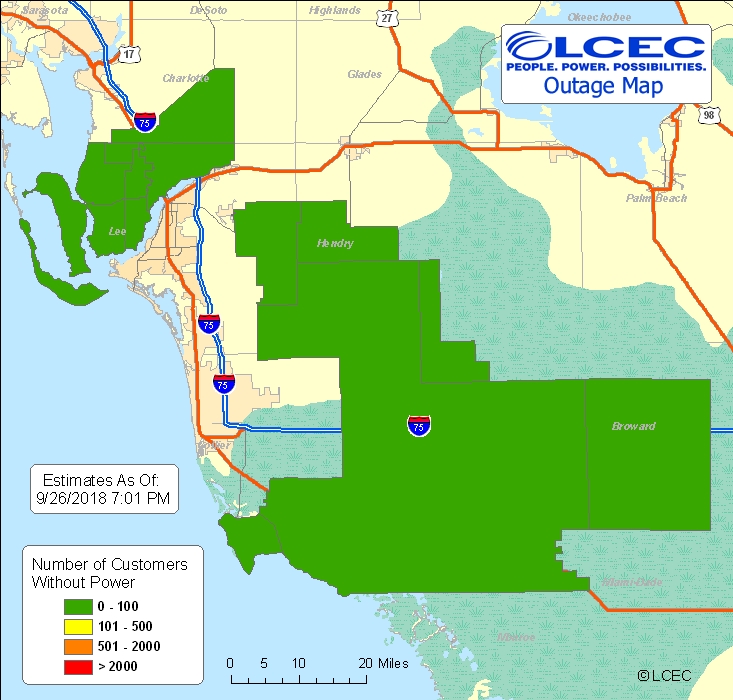
Karen Ryan, a spokeswoman for the Lee County Electric Cooperative, said about 1,300 residents had been affected as of 7 a.m.


"Most on our south system," she said. LCEC serves areas in Lee and Collier counties from Marco Island and Everglades City to Cape Coral and parts of North Fort Myers.

As of 8 .m. LCEC showed the Naples area with the most outages with 875, 205 in Cape Coral, 95 in North Fort Myers, 90 in Marco Island, 35 in Lehigh Acres and Immokalee, 18 in Sanibel and 2 on Pine Island.

Once Irma's effects have dissipated, LCEC said the order of power priority would be: Buildings housing emergency responders, like fire stations, police stations; City and county emergency operations centers; Area hospitals and shelters, housing those escaping from the storm; LCEC substations, providing power; Residences, especially those areas experiencing the highest outages; The most remote customers, where there aren’t many homes.

FPL was reporting a like number of outages in the service area it overs in Southwest Florida.

Here’s a 9 a.m. update for Florida’s west coast:
Manatee County: Customers: 184,900; Without power: 60; Power restored: 150; Sarasota County: Customers: 263,800; Without power: 350; Power restored: 1,840; De Soto County: Customers: 16,600; Without power: 130; Power restored: 230; Charlotte County; Customers: 114,100; Without power: 230; Power restored: 330; Lee County:  Customers: 259,900; Without power: 1,350; Power restored: 1,760;Collier County: Customers: 210,700; Without power: 3,010; Power restored: 4,020; Monroe County:  Customers: 90; Without power: 90; Power restored: 0

FPL has about 1 million customer accounts, or 2 million people, in Manatee, Sarasota, De Soto, Charlotte, Lee, Collier, and Monroe counties, according to its website.


Radar over South Florida (Photo: National Weather Service)


Company officials estimate about 6 million people, representing 3.4 million customer accounts, will lose power in the storm’s wake. A majority will be on the west coast if Irma continues on her current track.

The company, which serves five million accounts representing 10 million people in 35 counties, expects to perform major restoration efforts on Florida’s east coast and a rebuild of its system on the west coast, which Irma is expected to destroy.

Restoration can take anywhere from hours to days, while a rebuild could takes weeks or more, company representatives said.

The company plans to deploy about 16,000 utility workers from 29 different states to begin restoration efforts once conditions are safe.

Staging areas are shifting west with Irma to be ready to work when the storm passes.

The workers, employed by other utilities companies throughout the U.S., can begin restoration work once winds drop to 35 mph and flood waters recede.

Continue to check for power outage updates.


Hurricanes Jose and Katia Are Gathering Strength While The World Is Still Watching Hurricane Irma,


As Category 4 Hurricane Irma commands most of the media attention this week, two other hurricanes -- Jose and Katia -- have been gathering strength as they threaten landfall.
Irma has been slamming Caribbean islands and was projected to reach Florida over the weekend. But Hurricane Jose has officially been classified a Category 3 storm, and Hurricane Katia was set to slam into Mexico early Saturday.
Jose is reportedly following a path similar to Irma's and could potentially hit the same Caribbean islands that were devastated by Irma days ago, the National Hurricane Center said. Antigua and Barbuda were alerted of possible “life-threatening flooding" due to Jose.
The center previously said Jose had sustained wind speeds of 60 mph, but recently became “a little bit stronger” – with winds reaching 125 mph as of Friday morning.
Jose was roughly 480 miles east-southeast of the northern Leeward Islands – which Irma already hit earlier this week.
Meantime, Hurricane Katia was threatening to make landfall early Saturday in the state of Veracruz in Mexico. 
Katia, classified as strong Category 2 hurricane and edging toward Category 3 status, has sustained winds of 90 mph, according to a Friday morning advisory. Hurricane warnings suggest rainfall from Katia could result in “life-threatening flash floods and mudslides, especially in areas of mountainous terrain," the National Hurricane Center said.
Katia is currently about 165 miles from Tampico, Mexico. 
Mexico was hit late Thursday by a powerful 8.1-magnitude earthquake, leaving at least 15 people dead and triggering tsunami waves, the U.S. Geological Survey said.


HUrricane Irma Ravages The Caribbean (See Images)


Updated 3:20 a.m. ET Thursday
France's Interior minister says Hurricane Irma has killed at least eight people and left 23 injured on French Caribbean island territories. The Associated Press reports:

Updated 2:14 a.m. ET Thursday
Speaking on French radio France Info, Gerard Collomb said the death toll in Saint-Martin and Saint-Barthelemy could be higher because rescue teams have yet to finish their inspection of the islands. Collomb said Thursday: "The reconnaissance will really start at daybreak."
The National Hurricane Center says the dangerous core of the storm will move away from Puerto Rico Thursday morning and is expected to pass just north of the Dominican Republic and Haiti. Irma is expected to be near the Turks and Caicos and southeastern Bahamas by Thursday evening.
Updated at 10 p.m. ET
Carving its way through the Caribbean, the monstrous Category 5 hurricane called Irma, with maximum sustained winds of 185 mph, demolished homes and killed one person on Barbuda and ripped apart structures in St. Martin as it headed westward toward the Dominican Republic and Haiti.
Antigua and Barbuda
Antigua's Prime Minister Gaston Browne says nearly every building on the country's island of Barbuda had been damaged after the storm hit early Wednesday. He estimates 60 percent of the inhabitants are homeless. He says a 2-year-old child was killed.
"It is just really a horrendous situation," he said after returning from an aerial inspection. He said roads and telecommunications systems have been destroyed, according to The Associated Press.
Earlier, referring to the country's other island of Antigua, Browne posted a message of relief to his Facebook page.


"Thank God for his mercies and blessings. He has protected and spared us from the worst of Irma. Thank God that there are no ... hurricane casualties reported to this time," he wrote.
In a subsequent statement, Browne said: "The forecast was that Antigua would be devastated, our infrastructure demolished, people killed and our economy destroyed. In the light of day, the picture is very different."
St. Martin/Sint Marteen, Anguilla, St. Barts
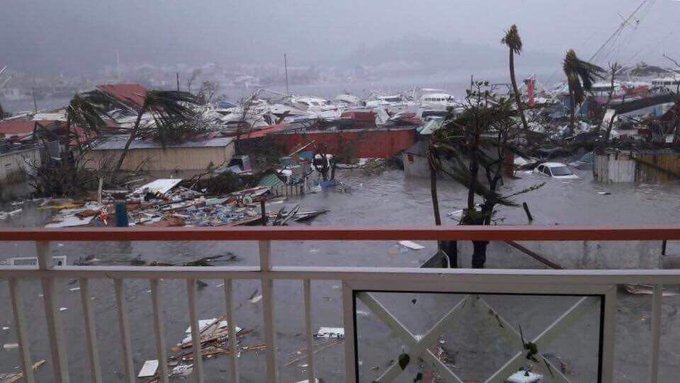
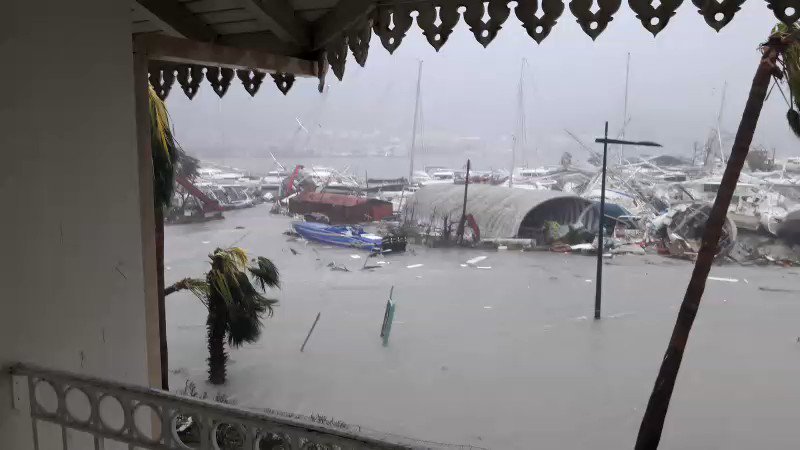
Video footage coming in from the half-French, half-Dutch island of St. Martin/Sint Maarten has painted a much different picture. One video, apparently shot from a second-story balcony, showed dozens of yachts smashed against a marina bulkhead and several feet of water inundating parked cars.
Dutch Interior Minister Ronald Plasterk says he believes the level of destruction on the island is "enormous."
Speaking to reporters in The Hague, Netherlands, Plasterk said the damage on the island "is so major that we don't yet have a full picture, also because contact is difficult at the moment."
The hurricane was so strong as it passed that it registered on a St. Martin seismometer that is designed to record earthquakes.
The islands of the eastern Caribbean are geographically varied — some such as Anguilla are flat and low-lying, while others such as Hispaniola are mountainous. Thus, they are likely to fare differently in the storm. But perhaps even more important is which side of the storm's path they fall on, with those along the leading northwestern side of Irma likely to get the brunt of its fierce winds. Islands to the south of its path should experience less severe winds but could still be subject to massive rainfall.
Directly southeast of St. Martin, video posted to social media from another French island, St. Barthelemy, also known as St. Barts, showed a river of water and floating debris running through a street.
In Paris, the French government said that it had delivered water and food to both St. Martin and St. Barts and that emergency response teams were being dispatched. Power was reportedly out on both islands, but no casualties were immediately reported. The British government said it would dispatch a Royal Navy Britain ship with humanitarian assistance to the region.
French President Emmanuel Macron says "the toll will be harsh and cruel" on St. Martin and St. Barts and that "material damage on both islands is considerable."
The Netherlands' Ambassador to the United Nations Karel van Oosterom said in addition to Sint Marteen, the islands of Sint Eustatius and Saba were also affected. "First information indicates that a lot of damage has been done but communication is still extremely difficult," he said, according to AP.
Virgin Islands
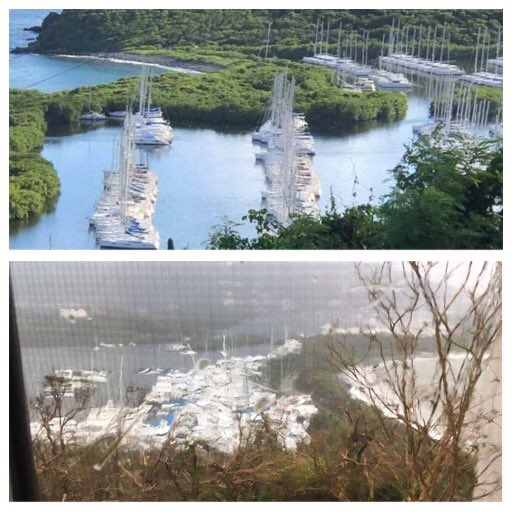
Irma raked the British Virgin Islands and the U.S. Virgin Islands and Puerto Rico on its way to a likely landfall in Florida later this week or early next week, forecasters say. As of Wednesday afternoon, the storm had passed over the British Virgin Islands, with gusts of nearly 90 mph and offshore waves of 30 feet.

A rescue team from the local emergency management agency inspects flooded areas late Wednesday in Fajardo, Puerto Rico, after the passing of Hurricane Irma. The category 5 storm is expected to make landfall in Florida by the weekend.
Jose Jimenez/Getty Images
The Associated Press interviewed Laura Strickling, a resident of St. Thomas in the U.S. Virgin Islands, who said she and her family spent 12 hours waiting out the storm in a boarded-up apartment with no electricity.
"They emerged to find the lush island in tatters, with many of their neighbors' homes damaged and the once-dense vegetation largely gone.
"There are no leaves. It is crazy. One of the things we loved about St. Thomas is that it was so green. And it's gone," said Strickling, who moved to the island with her husband three years ago from Washington, D.C. "It will take years for this community to get back on its feet."

A woman looks at heavy surf as Hurricane Irma approaches Puerto Rico in Luquillo on Wednesday.
Ricardo Arduengo/AFP/Getty Images
Puerto Rico
By evening, the storm was passing to the north of Puerto Rico, and the island's emergency management agency said hundreds of thousands of residents were without power and tens of thousands without water.
Ricardo Rosselló, the governor of the island of some 3.4 million people, had urged residents to seek shelter in one of the island's more than 450 hurricane shelters.
Lauren Weisenthal, 38, a transplanted New Yorker who moved to San Juan just six months ago, tells NPR that she and her husband, Brian, two dogs and a cat are situated high up on the bluffs surrounding the old city.
"We feel as prepared as we can be," Weisenthal said. "We are in a house that is 100 years old; it weathered Hurricane Hugo [in 1989] and we're feeling confident."
But, she says, people in other parts of the city and in rural areas prone to flooding are more nervous.
"Those living closer to the water are definitely more anxious, especially older people who have been through this before," she says.
Of most concern is the power situation, Weisenthal tells NPR. "We are concerned about that, but because we are in the old city, the center of government and tourism, we might get power back before the rest of the city."
"But we talk to people in some rural areas that are expecting electricity to be out for months," she says.
Loren Ann Mayo, an American tourist on the French island of Guadeloupe, just south of Irma's path, told CNN earlier that she was sheltering from the storm in the bathroom of her hotel room.
"The balcony snapped and is now hanging on by one little piece of wire," Mayo said.


RECENT POSTS

ad