ad

Showing posts with label amazon. Show all posts

Everything You Need to Know About the Amazon Affiliate Program

The Amazon affiliate program, also called "Amazon Associates" can be an easy way to monetize your website or blog. Simply sign up, receive immediate approval, and place Amazon affiliate links on your site today. When someone makes an Amazon purchase via one of your links, you get the commission -- it's that simple.

But how do you get started? Below, you'll find a step-by-step guide to becoming an Amazon Affiliate, with screenshots. Whether you're an aspiring entrepreneur, starting your own business, or just looking for a small business side hustle, I hope you'll find this guide a helpful place to start.

What is the Amazon Affiliate Program?

The Amazon Affiliate program, or Amazon Associates, is an affiliate marketing program.  It's free for website owners and bloggers to become Amazon Associates. They advertise products from Amazon.com on their sites by creating links. When customers click the links and buy products from Amazon, they earn referral fees.

1. Create a website or blog.

To become an Amazon Associate, you must have an active website, blog, app, or YouTube channel. It's also helpful if you've pre-populated that site with content, so it appears active and authentic to both users and Amazon.
Remember, you must be able to describe the purpose of your website as part of the application process. So, have a firm idea of why you're creating your site, the audience you'll target, and how you'll bring in traffic.

2. Visit the Amazon Associates homepage.

Now it's time to create your Amazon Associates account.
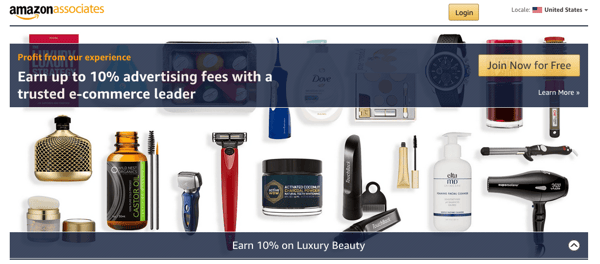
  • Visit the Amazon Associates homepage and click "Join Now for Free"
  • You'll be prompted to log in to your existing Amazon account or create one
amazon-associates 3. Build your Amazon Associates profile.

Once you've signed into your Amazon account, click "New Customer" and begin building your Associate account.
Save 40.0% on select products from Catry with promo code 40G754LG, through 8/22 while supplies last.

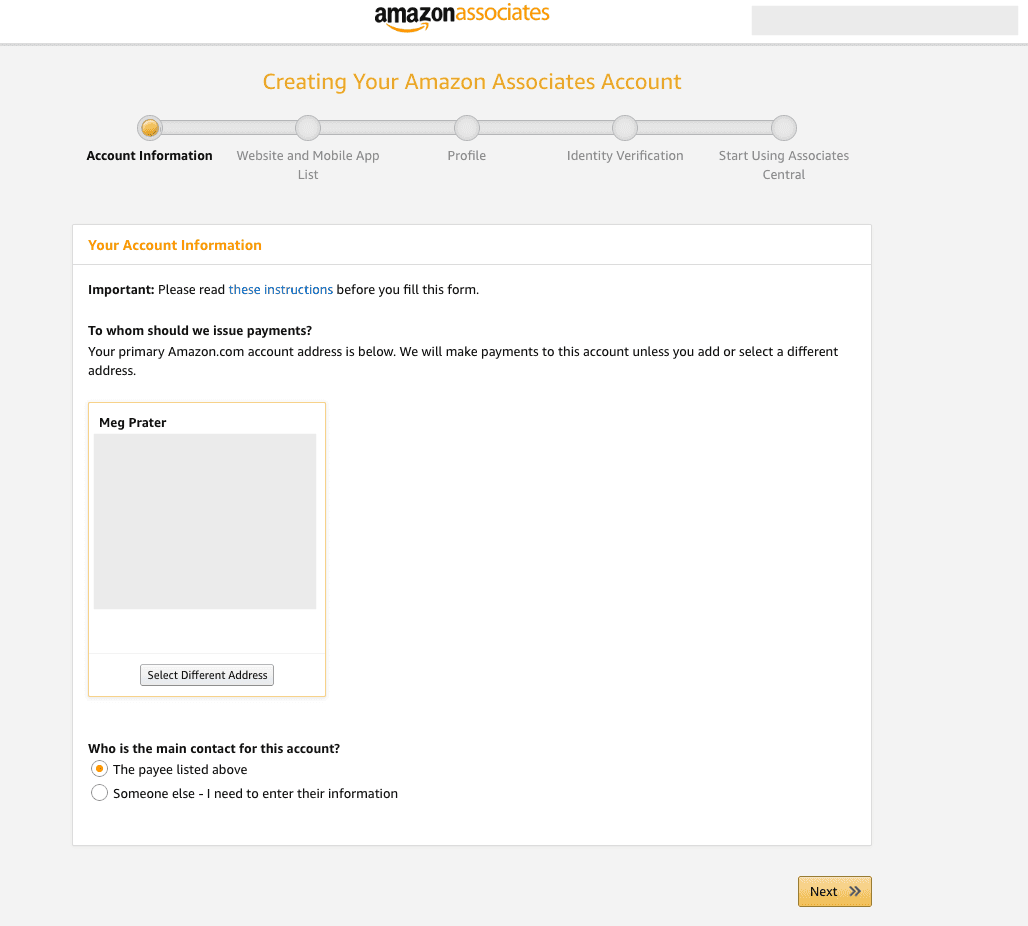
1. Enter your account information.

Enter your account info (including the name, address, phone number of the payee)
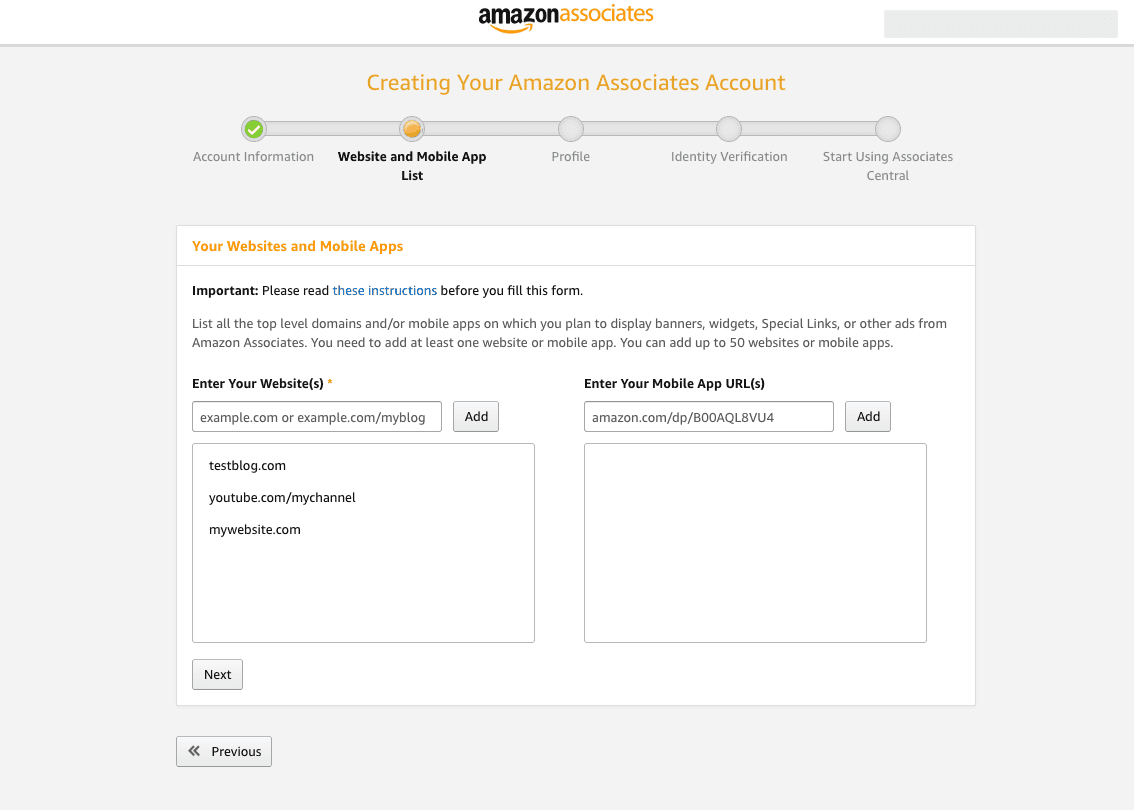
2. Enter your website address.

Enter your website address(es), apps, YouTube channels, etc.
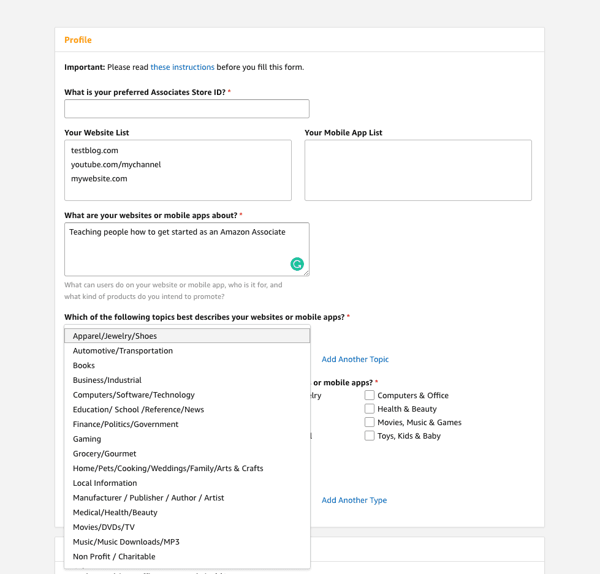
3. Enter your preferred store ID.

Enter your preferred store ID (usually the same as your primary website name), explain what your websites hope to accomplish, and select Amazon topics your links will likely target.
amazon-affiliate-3

4. Explain how you drive traffic to your site.

Explain how you drive traffic to your websites, how you use your website or apps to generate income, how you usually build links, and how many visitors your site brings in each month.

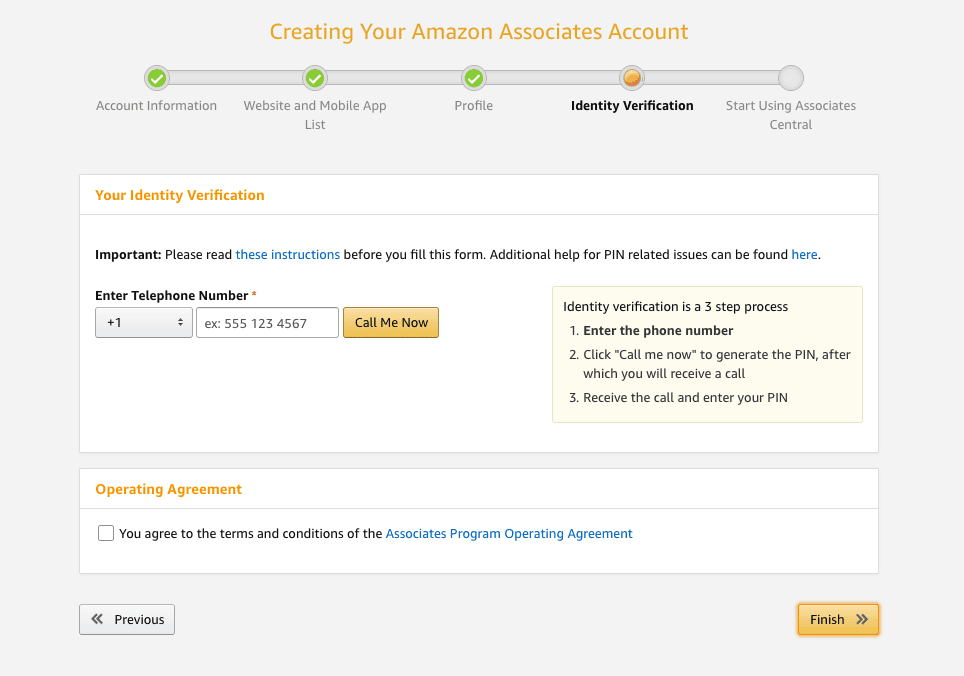
5. Enter your phone number.

Enter your phone number, press "Call Me Now," and wait for the immediate call from Amazon. They'll ask you to input a four-digit code, and once that is complete, your account will be approved.
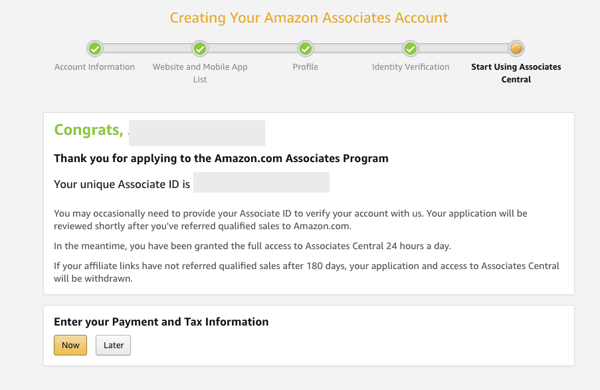
6. Choose your payment method.

Choose whether to enter your payment (credit card) and tax ID information in now or later. Then proceed to your dashboard.
amazon-affiliate-6

4. Create Amazon Affiliate links.

Once you've created your account, you'll be sent to your personal Associate homepage. This is where you'll find your performance dashboard (including an earnings overview, monthly summary, and total clicks).
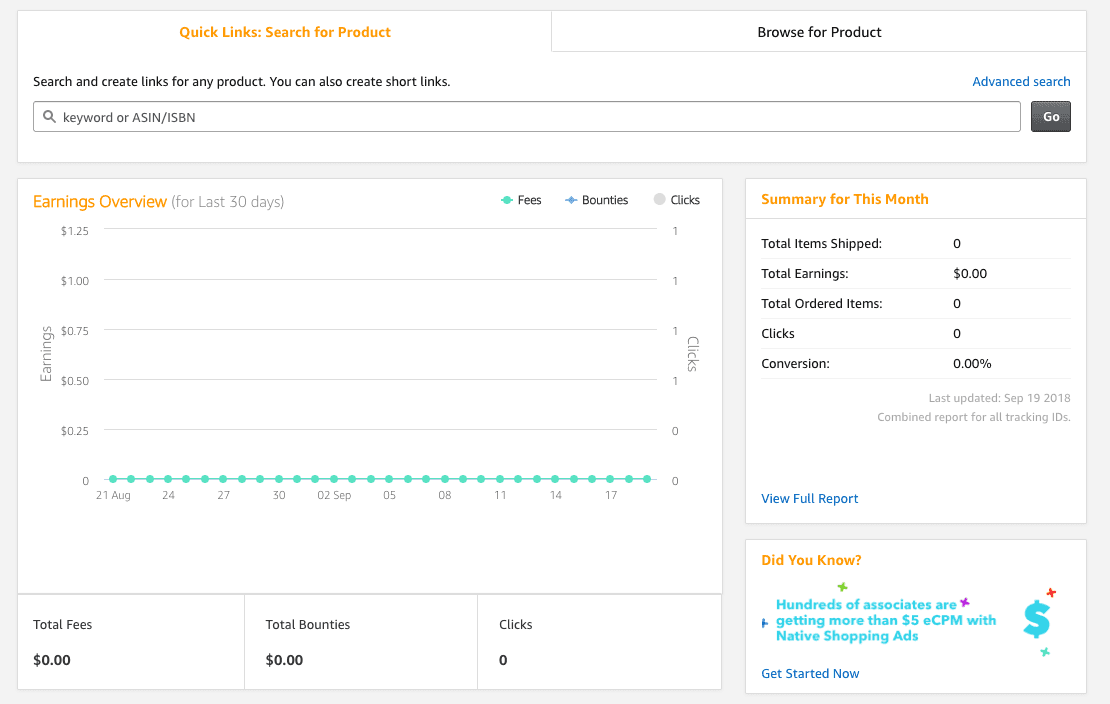
It's also where you'll search for relevant products to link to from your content. Here's how:
Your account will be approved for 180 days. During that time, you must make at least one sale, or your account will be closed. You can reapply for the Amazon Associate program after you've made certain adjustments to your site.
Are you ready to get started with the Amazon Associate Program? I hope guide helps. As with most marketing and sales, quality content is at the heart of success. Ensure you're attracting your audience with quality content and share relevant affiliate links with them on your site. Happy linking!

Woman Thought She has found A way to cheat Amazon. She Then Ordered Hundreds of Free Carpets But Soon Regret it


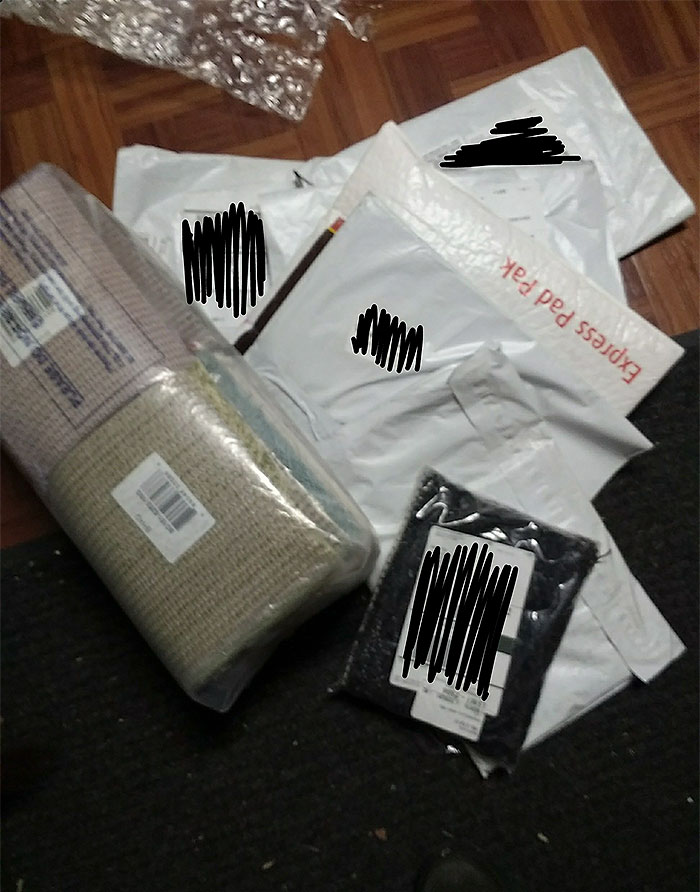
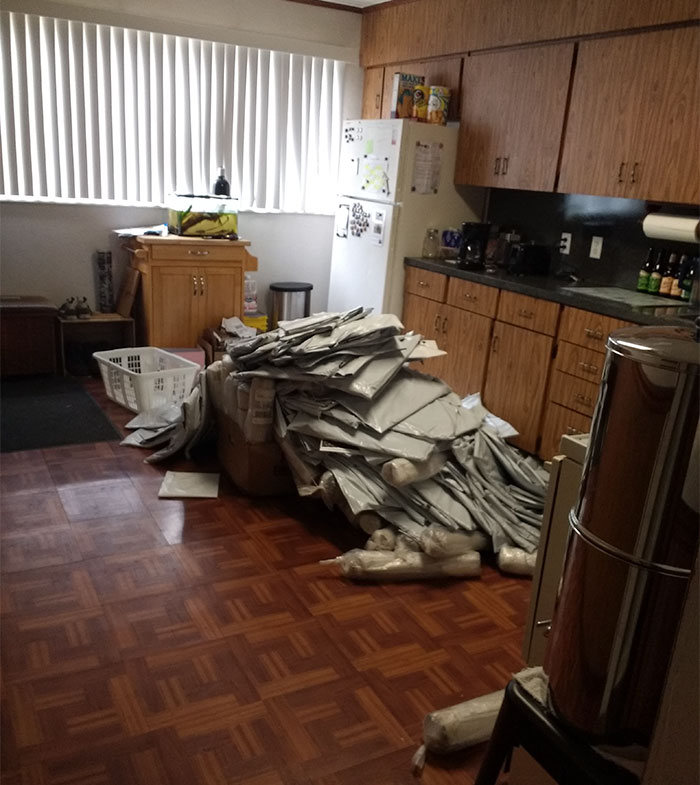
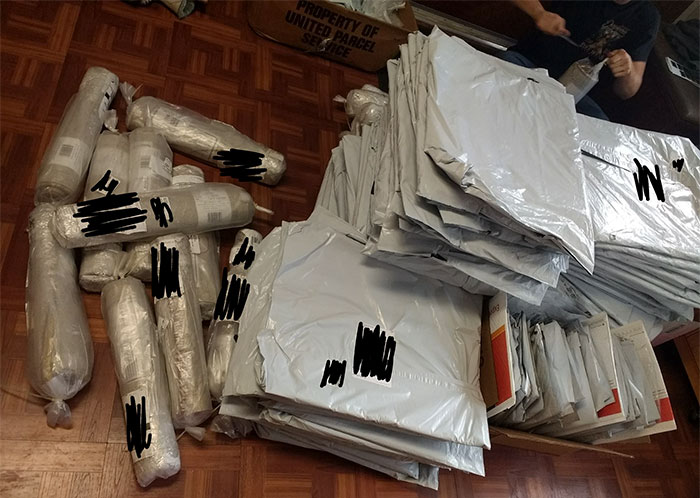
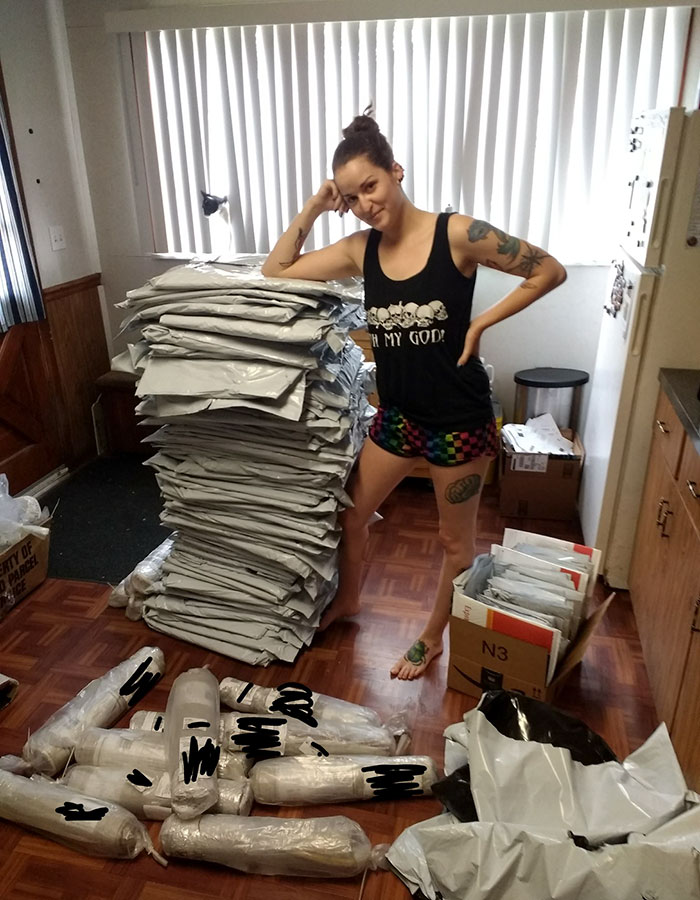
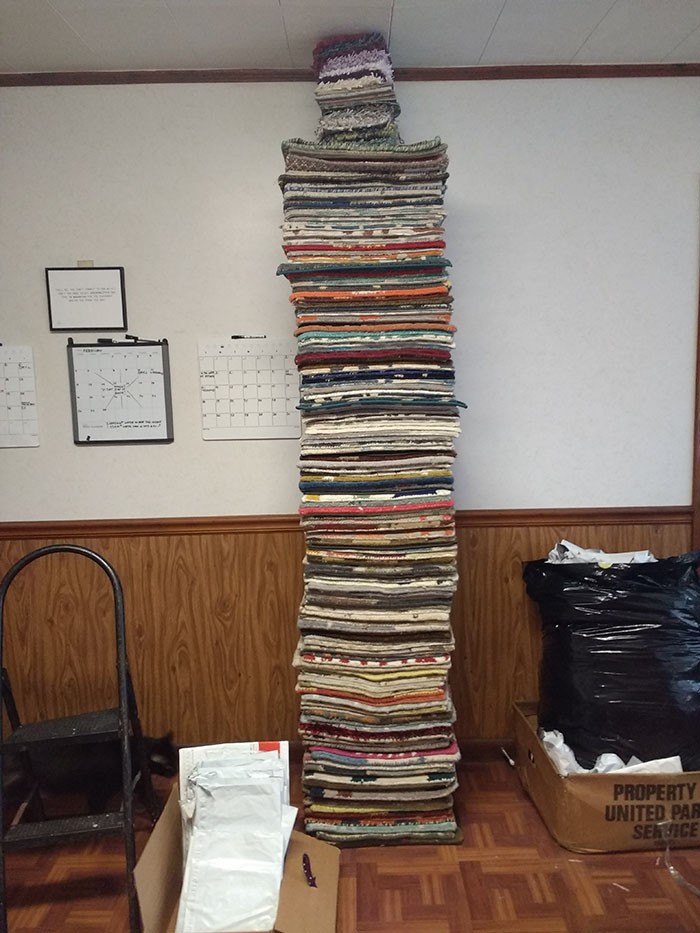
Free stuff! Everybody loves free stuff don’t they? Imagine the delight of this woman, imgur user RowdyMcMenace, when she discovered a feature on Amazon that will send carpet and fabric samples free of charge, delivered to her door. “I definitely got carried away ordering that many!” Rowdy said. “I got one small delivery at first, then yesterday the mountain arrived.”
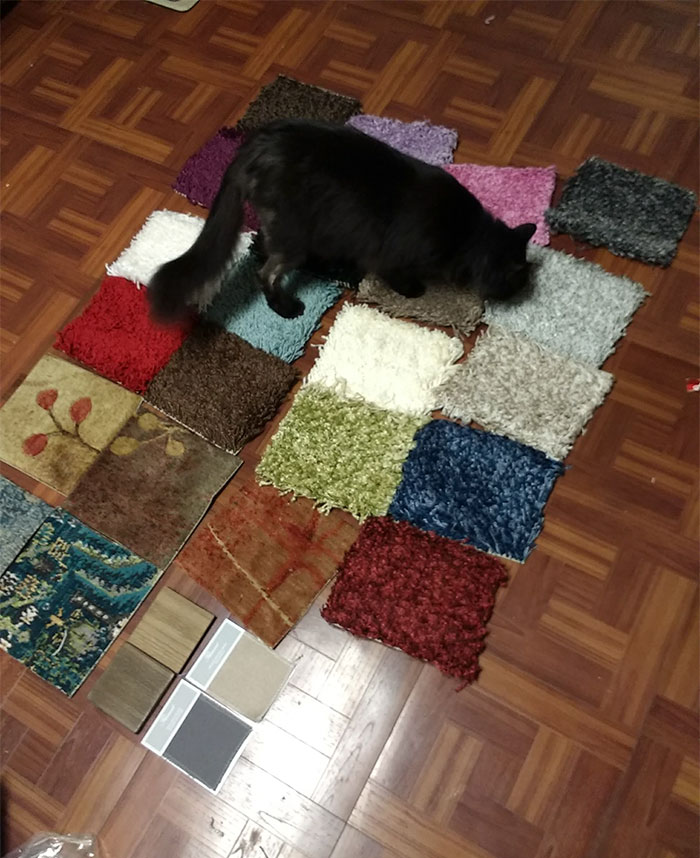
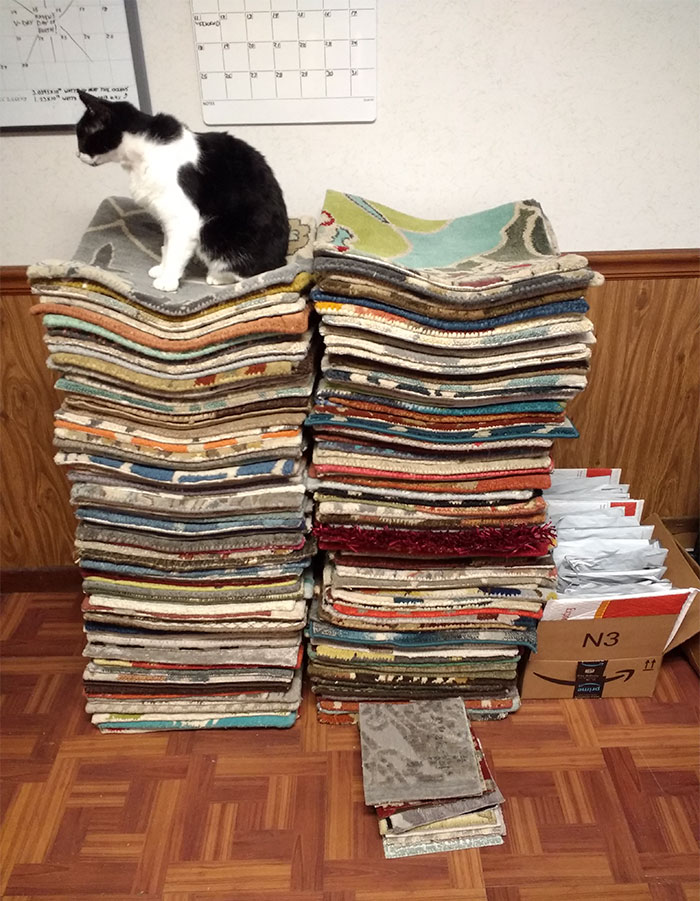
“These would make a neat cat scratcher and they’re free so…” she said about her reasoning behind the carpet collecting. Makes sense right? In her own words, she stated her case quite eloquently. “I never requested these under the pretense of making a purchase, and if a company can not afford to give away free swatches then they shouldn’t offer.”


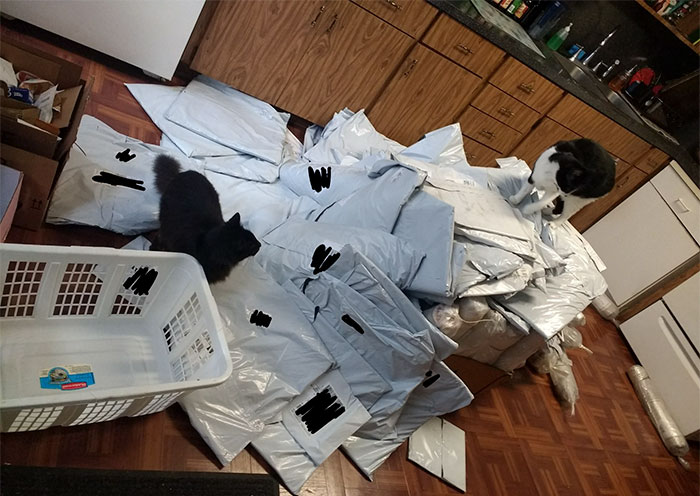
However, I think it’s fair to say she made an enemy out of the delivery guy by the time her sample splurge was finally satisfied, there were so many individually wrapped packages that he required a little extra assistance. “My boyfriend was home and awake so he helped the delivery guy bring everything inside,” she told us. “That’s why there’s an empty hamper in one picture- he was using it to carry a bunch at a time!”
Despite the unexpected arrival of the ‘mountain,’ Rowdy’s boyfriend appears to have taken the whole episode in good spirits. “My boyfriend is so laid back that after the mountain of parcels was inside he woke me up to watch me freak out,” she said. “I was in disbelief, then all I could do was laugh and apologize. I felt awful, but it was already done so might as well make the best of it! He helped me clean everything up then we played with the cats.”
Having learned her lesson from the binge, which came in packaging that she did not expect, she has kindly decided to donate the excess samples to local animal shelters. “I can’t bring myself to sell something I got for free,” she explained. “I’d much rather donate and share.”
Scroll down below to see her story, and let us know what you think in the comments!

“It started off innocently enough. I found this cool feature on Amazon to get free carpet swatches and thought they would make a neat cat scratcher and they’re free so…”


“The first bundle arrived and it was a good amount but I realized not all of the textures were gonna be good so I ordered more”


“A LOT MORE!!! HOLY SH*T”


“I am on night shift so I was woken up to this. The delivery guy is not happy. I swear I didn’t realize I ordered this many and I thought they were all going to be small!!”


“They are not small. The cats are super interested and I’m laughing hysterically out of nervousness that my future husband might realize I’m a psychopath and leave me”


“Oh man you guys I’ve really abused the system here. Let me know if you want me to show you how to abuse the system too! I’m an enabler, and it’ll make me feel better”


“I only hope the warehouse guys have dealt with my level of stupidity before because this tops the charts”


“We have halted progress now that all the big ones are open. I regret nothing. 10/10 recommend Kitty thrones”


“My advice: be picky. There’s plenty”


Amazon Prime Now Delivers Wine to Your Door in Just One Hour

Amazon has rolled out some key changes since it was purchased by Whole Foods earlier this year, with Amazon Prime Now being one of the biggest. The service—which is available in 30 U.S. cities—allows members to order household items straight to their door and receive them in an hour. Well, it seems the retailer has one-upped itself: Now included in that delivery service is wine.


Yep, you can have wine delivered to your door in one hour or less. But, like all good things, there's a catch: Right now, you have to live in one of the 12 cities below. Say a prayer, we're rooting for you.

Cincinnati
Chicago
Columbus, Ohio
Los Angeles
Minneapolis
New York City
Phoenix
Portland, Oregon
Richmond, Virginia
San Diego
San Francisco Bay Area
Seattle


4 Alternative Dry Shampoo Alternatives That Will Make You Dodge Gross Unhealthy Build-Up


When a hairstylist recently burst our dry shampoo bubble, we were devastated. Day in and day out, no matter how dirty our hair was, it gave us instant cool-girl texture. But beneath its powdery halo, we were gradually accruing scratchy build-up, throwing off the balance of our natural oils, and drying out our scalps. The worst part? All of these things can contribute to hair loss over time.

The bottom line is that when it comes to dry shampoo, it really can be too much of a good thing. Thankfully, you don't have to go cold turkey—you just have to use it in moderation, and try some of these alternatives to mix things up.


1.LINE YOUR BRUSH INSTEAD

Japanese natural skincare brand Mirai Clinical turned hair brushing into our new sacred beauty ritual with their deodorizing cotton brush liners. Infused with geisha-beloved persimmon, they absorb oil, dirt, and product debris sans residue every time you brush your hair.

Try: Mirai Clinical Deodorizing Hair Brush Liners - 30 Pack, $6; miraiclinical.com.


2. GO WITH A RINSE

We know, we know, having to get your hair wet is so not the point. But we promise—this is way less annoying than your typical lather, rinse, and repeat. A shampoo and conditioner substitute, it uses natural ingredients, like apple vinegar and aloe vera, to cleanse and condition the hair in one fell swoop. Plus, the squeeze bottle makes spot treating especially-oily areas a cinch.
dpHUE Apple Cider Vinegar Hair Rinse, $35; sephora.com.


3.FAKE IT WITH A SETTING POWDER

A lot of dry shampoos are thick and tacky—and that's a big part of the problem. If you're desperate to oil zap in powder-y fashion but don't want to deal with the gunk, dust your roots with a finely-milled translucent face powder. There's a reason it's nearly undetectable on your T-zone...

Try: Laura Mercier Translucent Loose Setting Powder, $38; sephora.com and up & up Powder Brush, $6.99; target.com.


4.MIST ON A DRY TEXTURIZER

Real Talk: Dry shampoo is just as much of a styling product as it is a cleanser. In fact, pro stylists love using it on squeaky-clean strands for some of that two-day-old grit. However, lightweight dry texture sprays will give you that same piece-y, cool-girl look in invisible fashion AKA you don't have to go full-on George Washington and sacrifice shine.

Try: Davines This Is a Dry Texturizer, $32; us. davines.com.


To Run An Import/Export Business, Here Are Major Agencies You Will Need Most


Let’s take a look at the agencies you may be working with as you manage your import/export business. While they can be divided in broad strokes into importers and exporters, there are many variations on the main theme.
Export management company (EMC). An EMC handles export operations for a domestic company that wants to sell its product overseas but doesn’t know how (and perhaps doesn’t want to know how). The EMC does it all -- hiring dealers, distributors and representatives; handling advertising, marketing and promotions; overseeing marking and packaging; arranging shipping; and sometimes arranging financing. In some cases, the EMC even takes title to (purchases) the goods, in essence becoming its own distributor. EMCs usually specialize by product, foreign market or both, and -- unless they’ve taken title -- are paid by commission, salary or retainer plus commission.


Export trading company (ETC). While an EMC has merchandise to sell and is using its energies to seek out buyers, an ETC attacks the other side of the trading coin. It identifies what foreign buyers want to spend their money on and then hunts down domestic sources willing to export, thus becoming a pseudo-EMC. An ETC sometimes takes title to the goods and sometimes works on a commis­sion basis.
Import/export merchant. This international entrepreneur is a sort of free agent. He has no specific client base and doesn’t specialize in any one industry or line of products. Instead, he purchases goods directly from a domestic or foreign manu­facturer, then packs, ships and resells the goods on his own. This means that unlike his compatriot, the EMC, he assumes all the risks (as well as all the profits).
Let’s say you’re an exporter with a really hot product to sell. Who do you look for? A buyer, otherwise known as an importer. Here’s the rundown on the various types of importers:
Commission agents. These are intermediaries commissioned by foreign firms searching for domestic products to purchase.
Commission representatives. Similar to independent sales reps in the United States, these folks usually work on a commission basis, and because they don’t purchase (take title to) the product, they don’t assume any risk or responsibility.
Country-controlled buying agents. These foreign government agencies or quasi-governmental firms are charged with the responsibility of locating and purchasing desired products.
Foreign distributors. Similar to wholesale distributors in the United States, these merchants buy for their own account, taking title to and responsibility for the mer­chandise.
State-controlled trading companies. Some countries have government-sanctioned and controlled trading entities. These agencies often deal in raw materials, agricul­tural machinery, manufacturing equipment and technical instruments.

The major players

There are, of course, more players than just the importers, exporters and their cast of distributors and representatives. You’ll also be dealing with the major players in the game: the government entities.
Two important goals of the U.S. Customs Facilitation and Trade Enforcement Reauthorization Act of 2009 were enhancement of supply chain security and enhancement of trade facilitation. Toward those goals, the U.S. government created the U.S. Customs and Border Protection Agency (CBP) and the U.S. Immigration and Customs Enforcement Agency (ICE). Together these two agencies take on many more tasks than just checking for contraband souvenirs. According to their websites, they also:
  • assess and collect customs duties, excise taxes, fees and penalties due on imported merchandise;
  • intercept and seize contraband, including narcotics and other illegal drugs;
  • process people, baggage, cargo and mail;
  • administer certain navigation laws;
  • protect American business, labor and intellectual property rights by enforcing U.S. laws designed to prevent illegal trade practices, including pro­visions related to quotas and the marking of imported goods;
  • enforce the Anti-Dumping Act;
  • provide customs records for copyrights, patents and trademarks;
  • enforce import and export restrictions and prohi­bitions, including the export of technology used to make weapons of mass destruction;
  • protect against money laundering;
  • collect import/export data to translate into international trade statistics;
  • secure the national borders;
  • enforce immigration laws;
  • strive to guard against terrorism.
The Bureau of Industry and Security (BIS) is another entity that governs the exportation of sensitive materials such as defense systems, plutonium and encrypted software. Headed by the Department of Commerce, BIS administers export controls, coordinates Department of Commerce security activities, and oversees defense trade. The BIS manages the export of most merchandise through the Export Administration Regulations, also known as EAR.
Beyond CBP, ICE and BIS, various agencies regulate the importation and exportation of sundry products. To find out which agencies oversee your particular product(s), contact visit the CBP’s website. 

Guided tour

Depending on whether you’re importing or exporting, you can also get answers to your pesky procedure questions from a customs broker or a freight forwarder.
The customs broker (sometimes called a customhouse broker) is the importer’s pal. It’s their job to know the ins and outs of importing in intimate detail and to handle them for you. Some brokers are small outfits; others are large corporate entities. The U.S. Customs and Border Protection (CBP) licenses them all.
When you hire a customs broker, they act as your agent during the entry process. They prepare and file the entry documents, acquire any necessary bonds, deposit any required duties, get the merchandise released into their custody or yours, arrange delivery to the site you’ve chosen and obtain any drawback refunds. A customs broker isn’t a legal necessity, but a good one will make your life considerably easier.
While the customs broker is the importer’s best friend, the freight forwarder is the exporter’s pal. Acting as the exporter’s agent, the international freight forwarder uses their expertise with foreign import rules and regulations as well as domestic export laws to move cargo to overseas destinations.
Freight forwarders can assist with an order from the get-go by advising you of freight costs, port charges, consular fees, special documentation charges and insurance costs. They can recommend the proper type of packing to protect your merchandise in transit, arrange to have the goods packed at the port or containerized, quote shipping rates and then book your merchandise onto a plane, train, truck or cargo ship. Like a concierge in a really good hotel, they can get anything you’ve got anywhere you want it to go.
Like customs brokers, freight forwarders are licensed, but in this case, by the International Air Transport Association (IATA) and Federal Maritime Commission (for ocean freight). You don’t have to use the freight forwarder’s services to transport your goods, and not all exporters rely on such services, but they’re a definite plus.

'Swimming the trade channel'

Now it’s time to take a swim in the trade channel, the means by which the merchandise travels from manufacturer to end user. A manufacturer who uses a middleman who resells to the consumer is paddling around in a three-level channel of distribution. The middleman can be a merchant who purchases the goods and then resells them, or they can be an agent who acts as a broker but doesn’t take title to the stuff.
Who your fellow swimmers are will depend on how you configure your trade channel, but for now, let’s just get acquainted with the group:
Manufacturer’s representative. This is a salesperson who specializes in a type of product or line of complementary products, such as home electronics. He often provides addi­tional product assistance, such as warehousing and technical service.
Distributor or wholesale distributor. A company that buys the product you’ve imported and sells it to a retailer or other agent for further distribution until it gets to the end user.
Representative. A salesperson who pitches your product to wholesale or retail buyers, then passes the sale on to you; differs from the manufacturer’s rep in that they don’t necessarily specialize in a particular product or group of products.
Retailer. This is the tail end of the trade channel where the merchandise smacks into the consumer. As yet another variation on a theme, if the end user is not Joan Q. Public but an original equipment manufacturer (OEM), you don’t need to worry about the retailer because the OEM becomes your end of the line. (Think Dell purchasing a software program to pass along to its personal computer buyer as part of the goodie package.)


Jennifer Lawrence Stands Her Ground For Emotional Essay She Wrote After Trump's Victory


Jennifer Lawrence was one of many celebrities to make her voice heard in the days following Donald Trump's election victory. "Do not let this defeat you—let this enrage you!" Lawrence wrote in a powerful essay for Vice. "Let it motivate you! Let this be the fire you didn't have before. If you are an immigrant, if you are a person of color, if you are LGBTQ+, if you are a woman—don't be afraid, be loud!"


Though her statement was largely embraced, it drew some backlash from the right-wing, which Lawrence addressed during an interview on Good Morning America yesterday. "I didn't mean to speak to only people who voted for Hillary [Clinton]," Lawrence explained. "I meant to just speak to the divide. For any presidential candidate, being very extreme is scary, left or right."


Having starred in The Hunger Games franchise since 2012, Lawrence said that she was very aware that many of her younger fans would have recently reached voting age. "When the election happened, I couldn't help but think of those girls who are [now] 18," she said. "I completely understand when people say, 'Just shut up and act.' But for me there are times where I feel a real need to speak to those girls."


Hillary Clinton's Top Advisers Blames Huma Abedin Election Loss


While many of Hillary Clinton’s top advisers have focused their post-presidential election fury on blaming alleged Russian interference and FBI Director James Comey for Clinton’s loss, some in the so-called “Hillaryland” orbit are looking inward, including pointing fingers at Clinton’s most-trusted aide: Huma Abedin.

“The real anger is toward Hillary’s inner circle,” a Clinton insider told Vanity Fair for a Wednesday feature on Abedin. “They reinforced all the bad habits.”


One of the most important people in that “inner circle” was Abedin, 40, who has been by Clinton’s side since she was a White House intern during President Bill Clinton’s tenure. The email trove hacked from Clinton Campaign Chairman John Podesta and posted on WikiLeaks shows Abedin, the estranged wife of disgraced ex-Congressman Anthony Weiner, as an important resource for the campaign. The vice chair of the Clinton campaign, Abedin offered guidance on Clinton’s probable thoughts regarding upcoming events, meetings and calls before the requests ever made it to the Democratic presidential candidate. While her fingerprints don’t often appear on policy issues, she weighed in with authority on most other matters.

Clinton was known to keep an extremely small and tight-knit group around her, and, indeed, during the 2016 primary and presidential campaign, the core group – including Campaign Manager Robbie Mook, Communications Director Jennifer Palmieri, adviser Cheryl Mills, Podesta and Abedin – never changed.

One Clinton insider, however, said the closeness of that group also created problems, prompting dismissive answers when new ideas that originated outside the circle were suggested, Vanity Fair reported.

“Where in most presidential campaigns the circle grows broader and broader, hers grew smaller and smaller,” a source told Vanity Fair.

A spokesperson for the Clinton campaign disputed that notion to Vanity Fair and said the campaign’s plane seated up to three times as many people during the run-up to the November vote. Abedin declined to be interviewed for the feature.

Abedin’s proximity to Clinton – and in turn the limelight – also created another issue, according to some observers.

“She was enjoying the red carpet and enjoying the photo spreads much too much in my opinion,” one Clinton insider told Vanity Fair. “She enjoyed being a celebrity too much.”

Though Abedin’s next move seems to be in limbo now that Clinton’s political career appears to be over, she was recently spotted at Clinton’s “Thank You” holiday party for top-tier donors on Thursday and then at an after party with fellow attendees Mick Jagger and Reese Witherspoon, The New York Post reported.

“Maybe I’m just p----- off, but I really don’t give a s--- about what happens to Huma to be honest with you,” one close adviser to Clinton told Vanity Fair.


Special Dating Site for Trump Supporters Witnesses Increase in Users After Donald Trump's Victory


Earlier this year, we reported on Trump Singles, a dating site where supporters of President-elect Donald Trump can find each other.


Steve Doocy reported that 12,000 people have signed up on the site.
Founder David Goss told The Hollywood Reporter that "business is great" and there's been a spike in memberships since the presidential election.
"After he won, we've consistently had people sign up every single day," Goss, a Republican who voted for Trump, said. "We never expected him to win — at least I didn't."
"I'm so glad we have something out there to help people find each other. For some people, going on dates and finding out that they supported Trump was a deal killer. That's not the case for our users."
The site is free to sign up, but users can only send one message a day unless they pay a $4.95 monthly subscription for unlimited use.


This Baby Doll For Children Makes Sexy Sound Instead Crying Baby Sound


Clearly Santa's elves were feeling a little naughty (frisky?) this year, because one British mom is reporting that the "Cry Baby" doll she bought her two-year-old daughter for Christmas makes "sex noises" instead of, you know, crying noises. Judge for yourself:


I mean, it's definitely a little bit porny, right!? Gail Turley, of Aberdare in Wales, told Wales Online that her daughter Kayla had seen ads for the "Cry Baby" — like the one below — on TV, and that it was "the only thing she’s asked for" for Christmas. After purchasing the doll on eBay, Turley says she tested it out (you know, to make sure the batteries were working) before wrapping it, and was shocked to hear the "inappropriate wailing." WATCH THE VIDEO BELOW AND BE THE JUDGE:


Turley says she's not sure whether to give Kayla the doll after all now, and says that other parents she knows have been forced to return their purchases after hearing equally erotic wails. As Wales Online notes, some Amazon reviews for the three Cry Baby models describe the "dodgy porn star" vocals, and also mention that the fluid designed to mimic baby tears leaks. (Others, though, give the dolls five stars.)


The Top 4 Technology Stocks to Buy Instead of Amazon or Facebook for 2017


Semiconductor and cybersecurity stocks are poised for growth—and relatively cheap.

The weeks before Thanksgiving brought a cornucopia of good news to tech investor Paul Wick. Five companies he owned in the Columbia Seligman Communications and Information Fund were acquired in rapid succession as an M&A wave swept the semiconductor industry—a slice of the technology sector to which Wick has dedicated nearly half of his $4.4 billion fund. Meanwhile, shares in the Silicon Valley–based portfolio manager’s biggest holding, LAM Research, hit an all-time high. “Yet there’s still considerable upside,” says Wick. “We’re more bullish about the semi­conductor industry than we are about software or the Internet sector.”


Technology, though one of the most profitable and fastest-growing S&P 500 sectors, also tends to be relatively expensive. And investors are jittery about how President Trump’s policies might ­affect some of the largest players: After Facebook  , Amazon  , Netflix , and Google   sold off in the wake of the election, DoubleLine CEO Jeffrey Gundlach advised investors “to stay away from these things in a big way.” But investors like Wick are finding exceptions to that ­sentiment—particularly in less glamorous but no less important corners of the industry.
Though it might seem imprudent to recommend a stock that’s already risen 35% this year, LAM Research   still trades at 13 times its 2017 estimated earnings. That means the stock trades at a 21% discount to the S&P 500 and is 18% cheaper than the technology sector. (For what it’s worth, LAM’s run pales beside that of the S&P 500’s best-performing stock in the first 11 months of 2016, the chipmaker Nvidia , whose stock has almost tripled.)
LAM doesn’t make the chips themselves, but rather equipment that companies like Samsung (one of its largest customers) use to put “flash” memory into semiconductors that are used in everything from iPhones to fitness trackers to Tesla  cars. Flash memory—so called because it processes data faster and with less heat than traditional hard disk drives—has become essential in enabling companies like Apple   to make its MacBooks more powerful and smaller at the same time, while allowing companies like Amazon and Spotify to retrieve music from their massive cloud libraries instantaneously.
Historically, LAM’s stock has traded at a discount because its earnings “tend to have a lot of wiggle,” fluctuating depending on electronics’ product cycles, says USAA’s head of equities John Toohey, who is also a fan of the stock. But for the past three years LAM has grown consistently, increasing sales at a rate of 18% annually and averaging earnings growth of 56%. Wick expects that robust growth to continue in 2017, as the accelerating pace of innovation keeps semiconductor foundries buzzing: “There is no such thing as a semiconductor cycle anymore,” he says. Plus, LAM pays a dividend yielding nearly 2%—and with almost two-thirds of its cash offshore, it could benefit from a potential tax-repatriation holiday in the U.S.
fun_earning_growth
As the number of devices connected to the Internet has expanded, so has concern over how to keep that data safe. Spending on cybersecurity equipment, including firewalls, was on pace to grow about 13% in 2016, to $10.6 billion, Gartner says, but that rate is expected to slow to 8% over the next few years. Still, Palo Alto Networks  , which makes state-of-the-art security systems known as next-generation firewalls, is growing its sales about four times as fast. “They’re really on the cutting edge to help people protect their infrastructure,” says Margaret Vitrano, portfolio manager of the $4 billion ClearBridge Large Cap Growth Fund. Although ups and downs in businesses’ cybersecurity spending can mean volatility for Palo Alto’s earnings and its stock, the company expects to grow revenue 31% next fiscal year, making its 2017 estimated P/E of 49 look fairly reasonable.
Elsewhere in cybersecurity, Wick likes Check Point Software Technologies , a cheaper option (a P/E of 17). Founded in Israel in the pre-dotcom-boom 1990s, Check Point has proved to be “much more shareholder-friendly” than some of its younger peers and social media companies, Wick says; the company has bought back stock from shareholders for 13 straight years through 2016.
Other investors are rethinking what it means to be a tech stock—finding opportunities in other industries where companies are using technology to make over their business models. Henry Ellenbogen, who manages the $16.3 billion T. Rowe Price New Horizons Fund, points to Vail Resorts   . Once just an elite place to ski in Colorado, Vail has adopted a subscription model for lift tickets the way Salesforce   has done for software and startup ClassPass has done for yoga and spinning classes: Think of it as a season’s pass with unlimited access to 13 different mountains in six states, Canada, and Australia. The company offers an app and harnesses its data to make chairlift lines more efficient—one reliable way to keep customers coming back. And Vail has been regularly acquiring new property and tucking it into its network, giving the company a scale that has helped Vail generate returns on capital unprecedented for its industry. The stock trades at a 2017 P/E ratio of 31, but Ellenbogen expects Vail to grow earnings organically 10% to 13% next year.
PICKS:
LAM Research   
Palo Alto Networks  
Check Point Software Technologies  
Vail Resorts  


RECENT POSTS

ad